You know this place. We'll help with the telling.
You've spent years — maybe decades — gathering the real history of your suburb. Suburb Historian is the AI-assisted tool that turns that research into a published, walkable Story Trail fast, without asking you to become a web developer to do it.
You're the expert. Let the AI do the first draft.
Most local historians we've met are "wonk-ish" in the best way — deep on facts, dates, and sources, but not necessarily practised at turning thirty years of research into a story someone would stop walking to read. Suburb Historian bridges exactly that gap.
Research to published trail, with you reviewing every step.
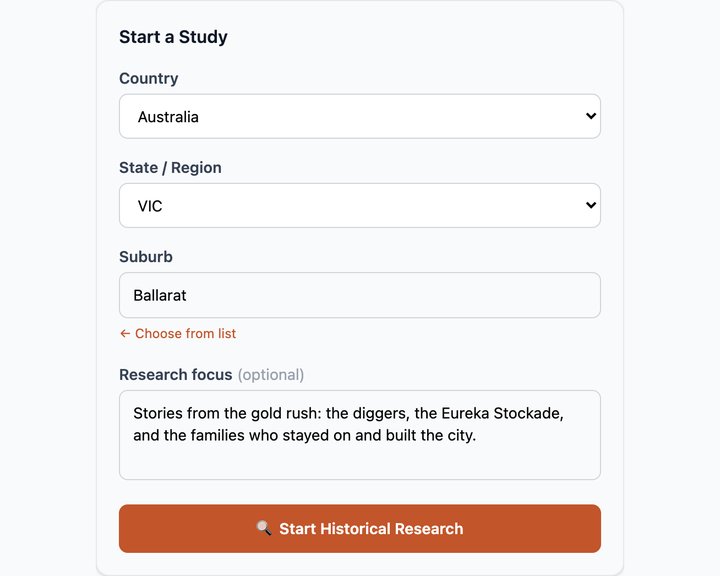
Pick a suburb
Search for the area you research and Suburb Historian starts a study — searching the web and curating historical photos from Trove, Flickr, and Wikimedia Commons.
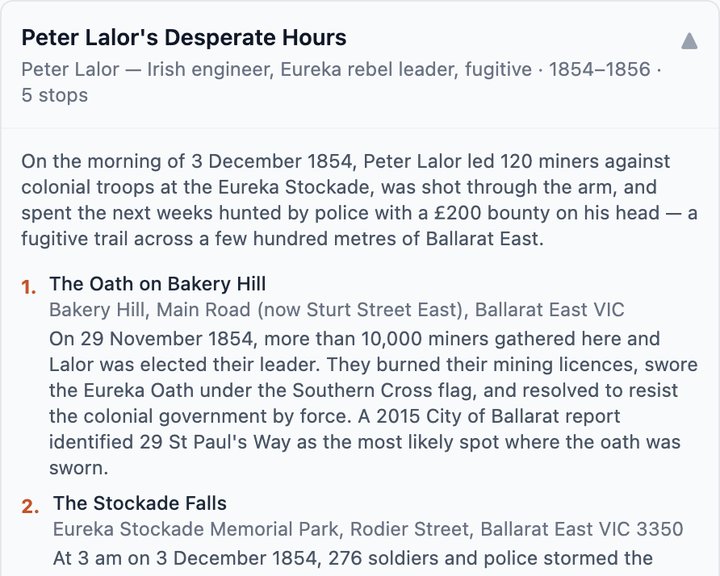
Review the research
Nothing publishes itself. You read what was found, add feedback or corrections, and approve before a single word gets written.
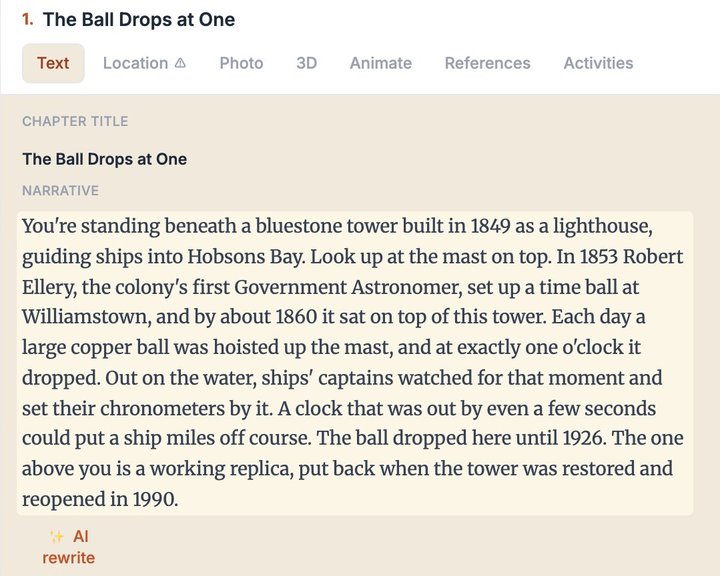
Shape the story
AI drafts each waypoint in the Story Trail voice — specific, human, told rather than captioned — and edits inline, right down to the sentence.
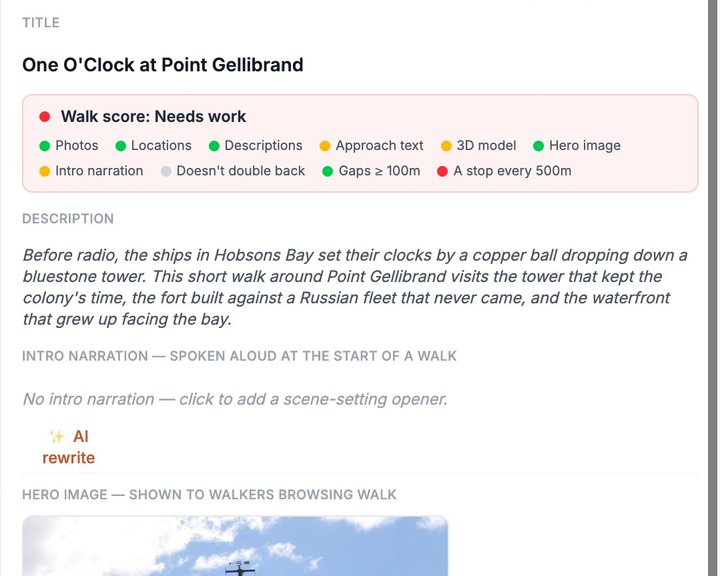
Publish when ready
A Walk Score shows what's ready and what still needs a look. Trails stay as private drafts until you say go; publish flips them live on Story Trail's map for walkers to find.
You stay in control of every word.
Suburb Historian never publishes anything on your behalf. Three review checkpoints — research, draft, and photos — put a person in the loop at every stage, and the software's job at each one is to help, not to judge.
- ✓ Inline editing on every waypoint, down to the sentence
- ✓ Add, delete, or reorder waypoints and whole trails
- ✓ Pick from AI-curated photos, search a specific phrase, or upload your own
- ✓ Nothing goes live until you publish it
- Research review — check what was found before a word is written.
- Draft review — edit the narrative, in your voice, in the app.
- Photo review — pick the image, or find your own.
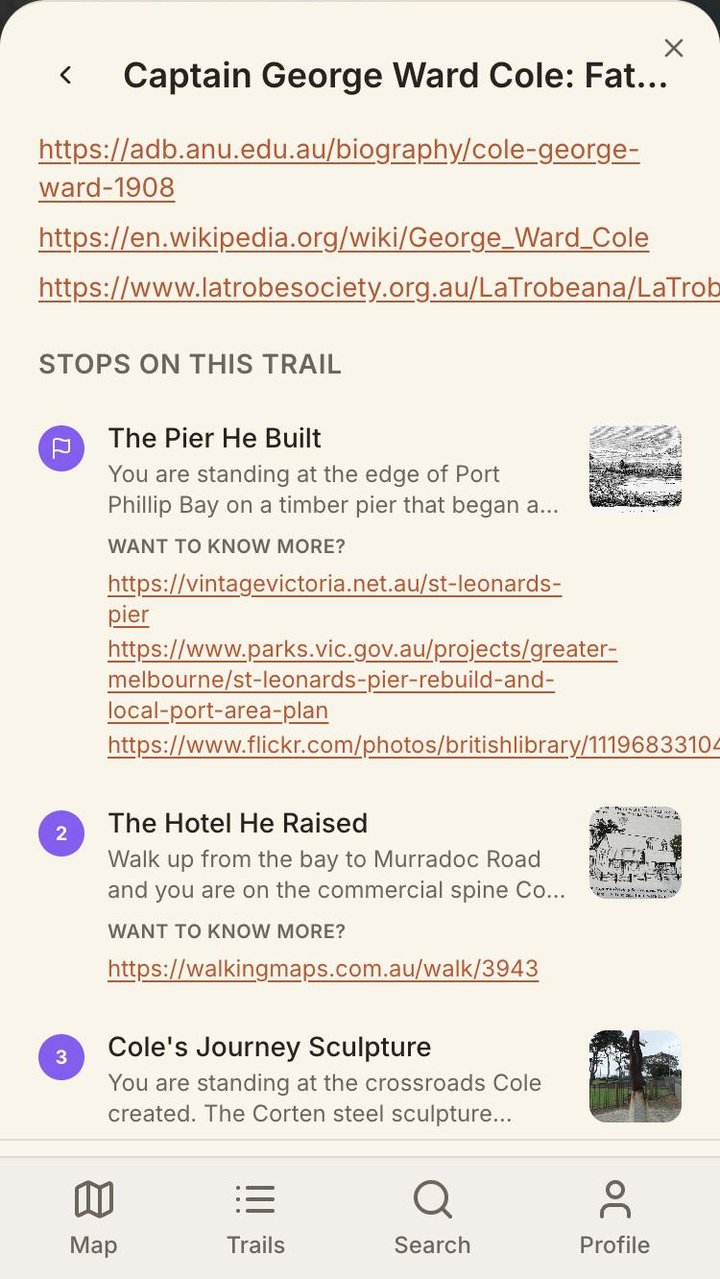
Send walkers to your publications and your rooms.
Every waypoint can carry source references — the book, the museum, the historical society whose research made the trail possible. A walker who finishes a chapter sees exactly where to go next: your publication, your open day, your front door.
If you're part of an organisation, your logo appears on the trail cards you publish — the credit for the research stays visible all the way through.
No web development required.
Suburb Historian assumes the person at the keyboard might not be highly tech-fluent — plain language throughout, generous encouragement at every checkpoint, and nothing that requires knowing what a "research pipeline" is under the hood. If a search comes back thin, it says so kindly and suggests a next step, never a bare error.
You know this place better than anyone.
Start a study and see your first draft the same day.